

Signs It’s Time to Replace Your Pool Equipment (currently not offering media replacement at this time)
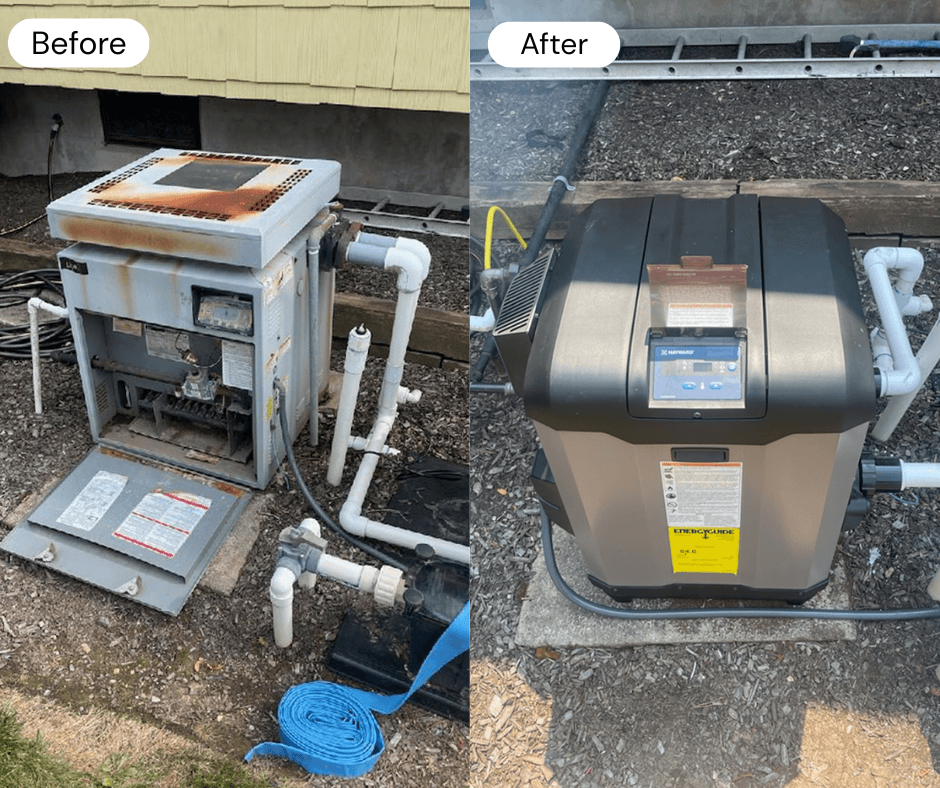
Pool equipment doesn’t last forever. Pumps, filters, heaters, and automation systems all have a lifespan, and at some point, the question shifts from how to fix something to whether it’s worth fixing at all. Knowing how to make that call saves you money, prevents mid-season breakdowns, and helps you get the most out of your pool during Syracuse’s already-short swim season.
Here’s how to think through the repair vs. replace decision for each major piece of equipment.
Pool Pumps
Your pump is the engine of your entire pool system. When it’s working properly you barely notice it. When it isn’t, everything else suffers.
Signs your pump needs attention include unusual noises like grinding or screeching, losing prime frequently, visible leaking around the housing, or reduced water flow that’s affecting circulation and filtration. Some of these issues, worn seals, a clogged impeller, a failing capacitor, are straightforward repairs. But if your pump is 8 to 10 years old and breaking down repeatedly, replacement is almost always the smarter move.
Modern variable-speed pumps are dramatically more energy efficient than older single-speed models. The energy savings alone often justify the cost of replacement within a season or two, making it an upgrade that pays for itself.
Filters
A filter that’s been properly maintained should give you many years of reliable service. But when your water stays cloudy despite balanced chemistry, or your pressure gauge reads consistently outside the normal range, your filter may be past its prime.
Sand filters need fresh media every 5 to 7 years. Cartridge filters need regular cartridge replacements. If the tank itself is cracked, or the internal components are failing, a new unit is the right call. Filter repairs on an old tank rarely make financial sense when a replacement brings better performance and a fresh warranty.
Heaters
Heaters tend to have a shorter lifespan than other pool equipment, typically in the range of 7 to 12 years depending on use and how well the water chemistry has been maintained. Corrosive water is hard on heat exchangers, and once corrosion sets in, repairs become a recurring cost rather than a one-time fix.
If your heater is throwing error codes repeatedly, struggling to reach set temperature, or requiring frequent service visits, the math usually favors replacement. A new high-efficiency unit costs less to operate and is far less likely to leave you without heat on a cool Syracuse evening when you want to extend your swim season.
Automation and Lighting
Older control systems that are glitchy, unresponsive, or no longer supported by the manufacturer are worth upgrading. Modern automation lets you manage your pool remotely, set schedules, and monitor your system in ways that older panels simply can’t match. The convenience factor is real, and so is the reliability improvement.
LED lighting upgrades are one of the more affordable equipment improvements you can make, with meaningful reductions in energy use and a noticeably better look in and around the water.
The 50% Rule
A useful general guideline: if a repair costs more than half of what a replacement would cost, and the equipment is already several years old, replacement is almost always the better investment. You’re not just paying for the fix. You’re paying to extend the life of something that’s already on its way out.
Precision Pool and Spa helps Syracuse pool owners make these calls with confidence. If your equipment is giving you trouble and you’re not sure whether to repair or replace, reach out and we’ll give you an honest assessment.