

Pool Tile vs Coping vs Plaster vs Bond Beam. What Needs Replacement and When?
A pool is made up of a lot of individual components and they don’t all age at the same rate. Some things need attention every decade or so. Others can go much longer with proper care. And a few, if ignored long enough, can turn from a cosmetic issue into a structural one. For Rochester including Western and Upstate NY pool owners who put their pools through significant seasonal stress every year, knowing what to watch for and when to act makes a real difference in the long-term cost and condition of your pool.
Waterline Tile
Waterline tile runs along the perimeter of your pool right at the surface of the water. It’s there partly for aesthetics and partly for function, creating a cleanable border that protects the pool shell from the chemical and biological activity that happens at the waterline.
Quality pool tile can last anywhere from 10 to 25 years, but Western and Upstate New York pools face some specific challenges. Freeze-thaw cycles put real stress on tile and the adhesive holding it in place. Water that gets behind a loose tile and then freezes can pop additional tiles off quickly. Calcium scaling along the waterline is extremely common and often looks worse than it is. Scaling can frequently be treated with a good cleaning rather than replacement. Cracked, loose, or missing tiles are a different matter and should be addressed promptly before water infiltration causes bigger problems.
Coping
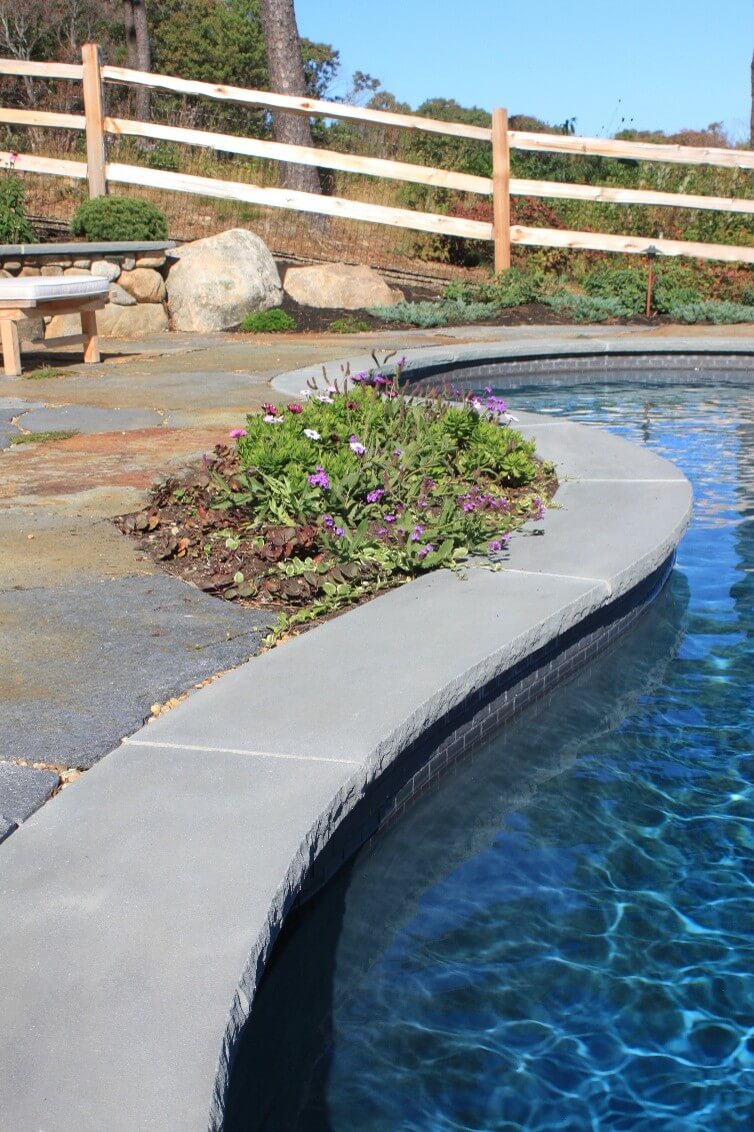
Coping is the cap that runs around the top edge of your pool wall. It’s the transition point between the pool and the deck, and it takes a lot of physical wear. Swimmers push off it, furniture scrapes across it, and it expands and contracts with every temperature swing through a season.
Concrete and brick coping typically holds up for 20 to 30 years before needing significant attention. Natural stone and paver coping can last longer with proper care and sealing. What to watch for includes cracking, lifting sections, and gaps that open up between coping pieces. Beyond the appearance issue, damaged coping allows water to get into the bond beam beneath it, and that’s where a manageable repair can turn into something more serious if left alone.
Interior Plaster and Finish
Your pool’s interior surface takes more abuse than any other component. It’s in constant contact with chemically treated water, exposed to UV when the pool is partially empty, and subject to the physical wear of swimmers and cleaning equipment.
Standard white plaster typically lasts 7 to 12 years before it needs to be resurfaced. The warning signs are hard to miss when they show up. Rough texture that wasn’t there before. Staining that won’t respond to chemical treatment. Visible pitting or etching across the surface. Areas where the plaster has begun to separate from the shell beneath it.
Premium finishes like quartz and pebble aggregate offer a meaningful durability upgrade, typically lasting 15 to 20 years before resurfacing is needed. They cost more upfront but the extended lifespan and improved appearance over time make them worth considering, particularly for pools in demanding climates like Rochester including Western and Upstate NY.
The Bond Beam
The bond beam is the structural band of reinforced concrete that runs around the top of your pool shell, tying the walls together and anchoring the coping above. Most pool owners never think about it until something goes wrong, but it plays a critical role in the structural integrity of your pool.
Cracks in the bond beam are serious and shouldn’t be ignored. They allow water to penetrate deep into the structure, which accelerates deterioration and can compromise the pool shell itself over time. Bond beam problems often show up indirectly. Coping that keeps cracking or shifting. Tile that comes loose repeatedly in the same area. Gaps that reappear after being filled. If you’re seeing a pattern of repeated issues in a specific section of your pool, the bond beam is worth having assessed.
Thinking About It as a Whole
Individual components rarely fail all at once, but renovation time is a natural opportunity to look at everything together. Addressing tile, coping, and interior resurfacing in a single project is almost always more efficient and cost-effective than tackling each one separately across multiple seasons. It also means your pool comes out of the project looking and performing consistently rather than piecemeal.
Precision Pool and Spa works with within Western and Upstate New York pool owners on everything from targeted repairs to full renovation projects. If you’re noticing wear in any of these areas and aren’t sure what it means, reach out today and we’ll take a look.